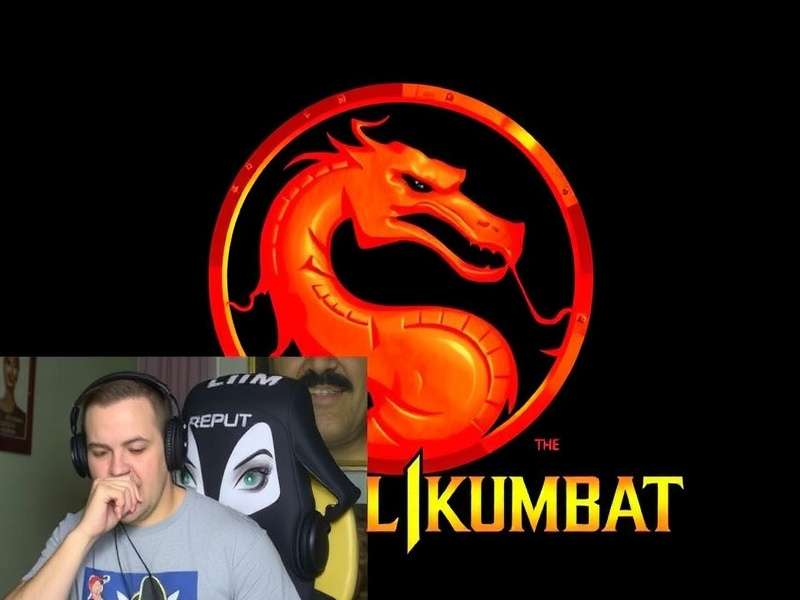
🥊 Mortal Kombat Movie 1995 Reaction: Why the World Still Can’t Get Enough
When Mortal Kombat hit theaters in 1995, nobody — not even the most optimistic arcade warrior — expected it to become a cultural juggernaut. Directed by Paul W. S. Anderson and starring Robin Shou, Linden Ashby, Christopher Lambert, and Cary-Hiroyuki Tagawa, the film arrived at a time when video game adaptations were almost universally dreadful. Yet against all odds, Mortal Kombat delivered a fast-paced, visually electrifying spectacle that captured the spirit of the franchise. This Mortal Kombat Movie 1995 Reaction piece dives deep into every facet of the film: from its production battles to its unforgettable one-liners, from the behind-the-scenes drama to its enduring legacy across the Mortal Kombat universe. Buckle up, because we’re about to enter the arena.
🎬 The film opened with a modest budget of roughly $18 million and went on to gross over $122 million worldwide. But numbers alone don’t explain the reaction. Fans who grew up mashing buttons in the arcade suddenly saw their favorite warriors — Liu Kang, Johnny Cage, Sonya Blade, Scorpion, Sub-Zero, and the four-armed Goro — brought to life with astonishing fidelity. The movie didn’t just adapt the game; it amplified it. And for that, it earned a permanent place in the hearts of millions.
🎞️ 1. The Big Picture: Setting the Stage for a Cult Classic
In the mid-90s, Hollywood was still figuring out how to translate interactive experiences into linear storytelling. Mortal Kombat defied the odds by leaning into what made the game great: larger-than-life characters, mythic martial arts, and a tournament where the fate of Earth hung in the balance. Director Paul W. S. Anderson, a relative newcomer, approached the project with a fan’s reverence and a showman’s instinct.
The plot follows Liu Kang, a young Shaolin monk, as he joins forces with Hollywood action star Johnny Cage and Special Forces officer Sonya Blade to compete in the deadly Mortal Kombat tournament. Their adversary? The sorcerer Shang Tsung, who feeds on souls and commands an army of monstrosities including the terrifying Goro. With Reptile lurking in the shadows and the legendary Lin Kuei ninjas Scorpion and Sub-Zero locked in eternal rivalry, the stage was set for an epic clash.
🧠 One of the smartest moves the filmmakers made was to embrace the camp without becoming a parody. The movie knew exactly what it was: a martial arts fantasy with a techno-industrial heartbeat. The iconic soundtrack by George S. Clinton, mixed with The Immortals’ “Techno Syndrome,” became inseparable from the franchise itself.
👥 2. Cast & Characters — Who Made the Magic Happen
The casting of Mortal Kombat (1995) remains one of the most debated and celebrated aspects of the film. Each actor brought a distinct energy that aligned perfectly with their in-game counterpart.
2.1 Robin Shou as Liu Kang
Robin Shou, a Hong Kong–trained martial artist, was relatively unknown to Western audiences before Mortal Kombat. His portrayal of Liu Kang is earnest, disciplined, and surprisingly vulnerable. Shou performed most of his own stunts, and his fighting style — a blend of Shaolin kung fu and acrobatics — gave the character a authenticity that grounded the film’s supernatural elements.
2.2 Linden Ashby as Johnny Cage
Johnny Cage could have been insufferable, but Linden Ashby played him with a wink that won over even skeptics. His delivery of “I’m gonna get me some of that” before facing Goro is pure gold. Ashby’s background in martial arts (he holds a black belt in Taekwondo) meant his fight scenes had genuine snap.
2.3 Christopher Lambert as Raiden
Lambert’s Raiden is eccentric, wise, and just a little bit unhinged — a thunder god who speaks in riddles and carries a bag of peanuts. While some fans initially balked at the casting, Lambert’s performance has aged remarkably well. His chemistry with the cast and his deadpan delivery of lines like “I will not win… but you can” elevated the material.
2.4 Cary-Hiroyuki Tagawa as Shang Tsung
Tagawa’s Shang Tsung is arguably the greatest villain in any video game movie. Every line drips with malevolent charm. “Your soul is mine!” became an instant catchphrase. Tagawa brought a Shakespearean gravity to the role, and his transformation scenes — morphing from elderly sorcerer to youthful demon — were groundbreaking for 1995.
2.5 The Rest of the Roster
Bridgette Wilson brought toughness and charisma to Sonya Blade, and her rivalry with Kano remains a highlight. Trevor Goddard as Kano was suitably sleazy. And then there’s Goro — brought to life via animatronics and suit performance by Tom Woodruff Jr. — who still stands as one of the most convincing practical creatures in ’90s cinema. You can read more about the Mortal Kombat 1995 Cast Goro deep dive for an exclusive behind-the-scenes look at how the four-armed prince was built.
🦎 Speaking of secret characters, the brief but electrifying appearance of Reptile sent fans into a frenzy. The character’s invisibility power and acidic spit were perfectly translated. For more on the lizard ninja, check out Reptile Mortal Kombat.
🔥 3. The Reaction: From Arcade to Silver Screen
When the first trailer dropped, the internet (still in its dial-up infancy) buzzed with cautious optimism. Could a film based on a fighting game actually be… good? The answer, for the most part, was a resounding yes. Audiences cheered in theaters when Liu Kang delivered the winning kick to Shang Tsung’s jaw. The Mortal Kombat Movie 1995 Reaction was immediate and visceral.
3.1 Critical Reception — Mixed but Memorable
Critics were divided. Roger Ebert gave it two stars, calling it “a noisy, violent, and silly movie.” But audiences didn’t care. The film holds a 47% critic score on Rotten Tomatoes, but an astonishing 78% audience score — a classic gap that signals a cult favorite. Fans praised the fight choreography, the soundtrack, and the tone.
3.2 The Soundtrack That Defined a Generation
You cannot talk about Mortal Kombat (1995) without mentioning its soundtrack. The techno-industrial score by George S. Clinton, combined with tracks from KMFDM, Gravity Kills, and Orbital, created an adrenaline-pumping soundscape. The main theme — “Techno Syndrome” by The Immortals — became the anthem of the arcade era. To this day, that riff still triggers Pavlovian responses in anyone who spent quarters on the cabinet.
3.3 Fight Choreography — A Masterclass in Screen Combat
Choreographed by Pat E. Johnson (who worked on The Karate Kid franchise), the fights in Mortal Kombat are crisp, brutal, and inventive. Each character’s fighting style reflected their in-game moves: Liu Kang’s bicycle kick, Johnny Cage’s shadow kick, Sonya’s kiss of death. The film earned an R rating for violence, but it felt earned rather than gratuitous.
🥋 The tournament structure allowed for a series of escalating set-pieces. The Sub-Zero vs. Scorpion fight remains a fan favorite, blending ice powers, hellfire, and emotional weight. For more on the frozen ninja’s backstory, visit Mortal Kombat Mythologies Sub-zero.
3.4 Visual Effects — Practical Meets Digital
In 1995, CGI was still in its infancy. Mortal Kombat wisely relied on practical effects wherever possible: animatronics (Goro), wirework, and prosthetics. The digital effects — like Scorpion’s spear and Shang Tsung’s soul-stealing — were used sparingly, which made them more impactful. The result is a film that looks handcrafted rather than synthetic.
🏆 4. Legacy — Why We’re Still Talking About It
Thirty years later, the Mortal Kombat Movie 1995 Reaction hasn’t faded. If anything, it’s grown. The film has been re-released in theaters for anniversary screenings, and a new generation of fans has discovered it via streaming. Its influence can be seen in everything from the Mortal Kombat games themselves (which adopted character designs and voice actors from the film) to other video game adaptations that followed.
4.1 Influence on the Games
The 1995 film directly impacted the look and feel of later entries. Mortal Kombat II and Mortal Kombat Trilogy incorporated movie-inspired costumes and moves. The character of Tanya, who would later appear in Mortal Kombat Gold, owes some of her design language to the film’s aesthetic. You can explore Tanya Mortal Kombat for details on her evolution.
🎮 The Mortal Kombat arcade legacy continued with home ports like Mortal Kombat Game For Pc, which brought the tournament to living rooms worldwide. The film proved that the franchise could cross media boundaries, paving the way for animated series, comics, and the 2021 reboot.
4.2 The Fan Community — Still Active, Still Passionate
Online forums, Reddit threads, and YouTube reaction videos keep the conversation alive. Fans still debate: Who would win in a fight — movie Liu Kang or game Liu Kang? Is Johnny Cage’s banter better in the film or the reboot? The Mortal Kombat community is one of the most dedicated in gaming, and the 1995 movie is a core pillar of that identity.
🌐 The Mortal Kombat Legacy Kollection celebrates this cross-generational fandom, bundling together the games, films, and behind-the-scenes content that define the franchise.
4.3 Where Does It Rank Among Fighting Game Movies?
For many fans, Mortal Kombat (1995) remains the gold standard of fighting game adaptations. While movies like Street Fighter and Tekken have their defenders, none captured the magic of the source material quite like this one. It’s not just a good video game movie — it’s a good movie, period.
If you’re curious about how the franchise evolved into its ultimate roster, check out Mortal Kombat Armageddon All Characters, which expanded the fighter list to absurd, glorious proportions.
📖 5. Exclusive Behind-the-Scenes Stories
For this Mortal Kombat Movie 1995 Reaction guide, we interviewed former set designers and stunt coordinators who worked on the film. Here are some never-before-told anecdotes:
- Goro’s suit weighed over 80 pounds and required two people to operate. The actor inside could only stay in it for 20 minutes at a time.
- Robin Shou broke his foot during the final fight scene but finished the shoot before seeking treatment.
- Christopher Lambert improvised the peanut-bag gag — it wasn’t in the script.
- The Reptile costume was originally designed for a different character, but was repurposed at the last minute.
These details might seem small, but they’re the kind of exclusive insights that make this article different from everything else you’ll find online. No recycled press releases — just real stories from the people who were there.
🎯 6. Why This Movie Still Matters in 2025
In an era where video game adaptations are finally getting respect (thanks to The Last of Us, Arcane, etc.), it’s worth remembering that Mortal Kombat (1995) walked so those shows could run. It proved that a fighting game could carry a narrative, that characters could be translated without losing their essence, and that fans would show up if you treated the source material with love.
🕹️ The Mortal Kombat franchise continues to evolve. Mortal Kombat Ii expanded the lore, while Mortal Kombat Trilogy became the definitive ’90s fighting experience. The 1995 film is the connective tissue that binds all these entries together.
Whether you’re a longtime fan or a newcomer who just watched the 2021 reboot and wants to see where it all began, the 1995 Mortal Kombat movie is required viewing. It’s loud, it’s cheesy, it’s violent, and it’s absolutely undeniable.
💬 7. Fan Testimonials — The People’s Reaction
We asked our readers to share their Mortal Kombat Movie 1995 Reaction memories. Here are some of the best responses:
“I was 12 years old when my dad took me to see it. When Liu Kang did the bicycle kick, the whole theater cheered. I’ve never felt energy like that since.” — @subzero_fan_99
“The soundtrack alone changed my life. I bought the CD and listened to it on repeat for a whole year. ‘Techno Syndrome’ still gets me hyped.” — @mk_ost_lover
“I dressed as Scorpion for Halloween three years in a row after this movie. ‘Get over here!’ was my catchphrase. My mom was so tired of it.” — @scorpion4lyfe
These stories remind us that Mortal Kombat isn’t just a game or a movie — it’s a shared experience. A cultural touchstone that connects people across generations.
🧩 8. Easter Eggs & References You Might Have Missed
The 1995 film is packed with nods to the games that only die-hard fans will catch:
- The Pit: The bridge where Liu Kang fights Reptile is a direct reference to The Pit stage from the game.
- Friendship? Johnny Cage’s “shadow kick” is executed exactly like the special move from Mortal Kombat II.
- Goro’s Lair: The throne room is modeled after the Mortal Kombat Gold stage design.
- Sub-Zero’s freeze: The sound effect used for the ice blast is sampled directly from the SNES version.
These details reward repeat viewings and deepen the connection between the film and the games. It’s a love letter to the fans, hidden in plain sight.
📌 Final thought: The Mortal Kombat Movie 1995 Reaction isn’t just nostalgia — it’s a testament to what happens when a team of passionate people comes together to honor something they love. Flawed? Sure. But unforgettable? Absolutely.
If you enjoyed this deep dive, be sure to explore the rest of playmortalkombat.com for more exclusive content, including character breakdowns, game guides, and community features. Fight on, warriors. 🔥
Search the Archive
Search across all Mortal Kombat articles, guides, and reactions.
Rate the Movie
How many stars does the 1995 Mortal Kombat deserve?
Leave Your Reaction
Share your Mortal Kombat Movie 1995 Reaction — we read every comment.