Johnny Cage Mortal Kombat Movie 1995: The Legend Lives On
When Mortal Kombat hit the big screen in 1995, it did something that most video game adaptations had failed to do before — it actually worked. While the entire movie is beloved by fans for its electric atmosphere, martial arts choreography, and unforgettable soundtrack, it was Johnny Cage, the cocky Hollywood action star, who became an unexpected emotional anchor of the story. In this deep dive, we explore everything about Johnny Cage Mortal Kombat Movie 1995 — his origins, his portrayal by Linden Ashby, his legacy, and his lasting impact on the franchise and its global fanbase, including here in India.
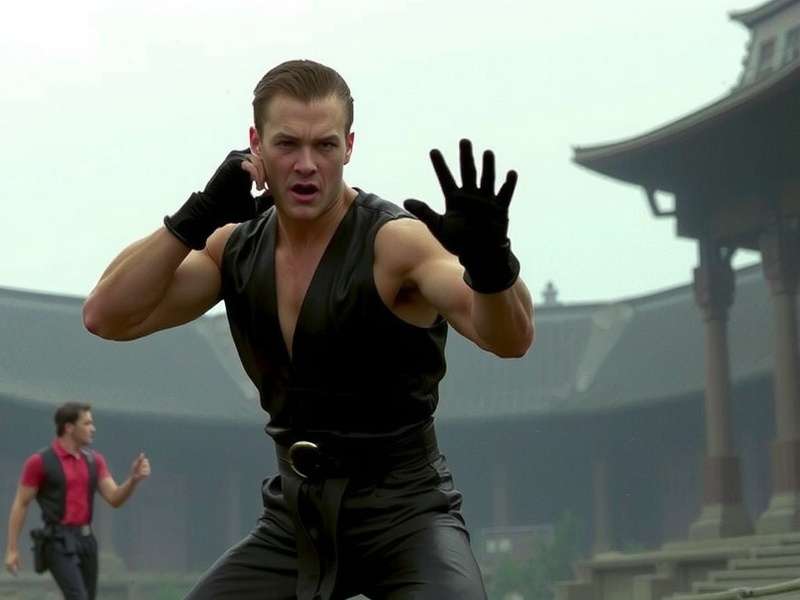
Johnny Cage (Linden Ashby) in the 1995 Mortal Kombat film — the cocky hero who won our hearts.
The Character of Johnny Cage: A Hollywood Icon in the World of Mortal Kombat
Origins in the Mortal Kombat Universe
Before discussing the movie itself, it's important to understand the character's roots. Johnny Cage debuted in the original 1992 Mortal Kombat arcade game as a playable character. He was designed as a tongue-in-cheek parody of action movie stars like Jean-Claude Van Damme, with a narcissistic personality and a flashy fighting style. In the games, Cage was an American martial artist and movie actor who join the Mortal Kombat tournament to prove his fighting skills were real, not just camera tricks. His personal saga — including his rivalries, his daughter Cassie Cage, and his eventual sacrifice in Mortal Kombat 4 — made him one of the most layered characters in the series.
Personality and Fighting Style
Johnny Cage is defined by his confident swagger, one-liners, and overwhelming charisma. He's the kind of guy who enters a fight with a cheesy smile and a rehearsed martial arts pose. But beneath that Hollywood façade is a genuinely dedicated fighter. His signature moves in the games include the Shadow Kick, the Shadow Uppercut, and the infamous Nut Punch — a move that simultaneously infuriates and amuses fans. In the 1995 film, this fighting style was adapted to feel more grounded but still retained its flashy, entertaining charm.
The Hollywood Persona
One of the most brilliant aspects of Johnny Cage is how he bridges the real-world movie industry and the fictional Mortal Kombat universe. He represents — almost satirically — an actor who is tired of being seen as a fake. When he says his movie stuntman does his own stunts, you can hear the frustration of an artist who wants to be taken seriously. This theme resonates not just with Hollywood but with audiences everywhere, including India, where cinema culture is celebrated and actors are often idolized. The 1995 movie amplified this by making him not just comic relief, but a key emotional component of the story.
Pro Tip: If you're new to the franchise, watching Johnny Cage Mortal Kombat Movie 1995 is the perfect starting point before diving into the Mortal Kombat Trilogy games.
The 1995 Mortal Kombat Movie — A Cinematic Landmark
Plot Overview: A Tournament Between Good and Evil
The film's premise is deceptively simple: ancient sorcerer Shang Tsung, brilliantly played by Cary Hiroyuki Tagawa, invites the realm's greatest warriors to participate in a deadly tournament. If Earthrealm loses, Outworld will invade and conquer. Enter three heroes: Liu Kang (Robin Shou), a young martial artist driven by revenge; Sonya Blade (Bridgette Wilson), a tough Special Forces operative; and our man Johnny Cage (Linden Ashby), a Hollywood superstar out to prove his real-world fighting credentials. Together, they must defeat Shang Tsung's team of monstrous warriors — including Sub-Zero, Scorpion, Reptile, and the primal Goro — across ten victorious rounds.
The Cast and Chemistry
The casting director deserves a raise. Linden Ashby, Robin Shou, and Bridgette Wilson shared a chemistry that felt authentic and warm. Ashby's Cage was brash but likable, never tipping into full arrogance. Shou's Liu Kang was brooding yet heroic. Wilson's Sonya was fierce but not one-dimensional. The trio's banter — especially the Cage-Sonya dynamic — was surprisingly sharp for a martial arts movie. The supporting cast, led by Cary Hiroyuki Tagawa's sinister Shang Tsung, elevated the entire production. Tagawa's delivery of the iconic line "Your soul is mine!" remains one of the most quoted villain lines in cinema history.
Directed by Paul W.S. Anderson
Before becoming a household name with Resident Evil, Paul W.S. Anderson directed Mortal Kombat with stylistic flair. He wisely used computer-generated imagery sparingly, focusing instead on practical effects and real martial arts choreography. The fight scenes were designed by legendary coordinator Pat E. Johnson, a veteran of the Karate Kid franchise. Anderson's direction captured the over-the-top energy of the arcade game while maintaining a coherent cinematic flow. The film's score, composed by George S. Clinton and featuring the infamous techno track by The Immortals, is itself a piece of 90s pop culture history.
Did You Know?
- The original script had Johnny Cage as a much darker character but was rewritten to be more family-friendly.
- Linden Ashby did most of his own stunts and trained extensively in taekwondo.
- The movie grossed over $122 million worldwide on a budget of ~$20 million.
Johnny Cage in the 1995 Movie: A Deeper Look
Linden Ashby's Performance
Linden Ashby, a relative unknown at the time, had the unenviable task of bringing a character defined by his games-era quirkiness to life. And he delivered spectacularly. Ashby's Johnny Cage is charming, funny, and surprisingly vulnerable. He navigates the line between self-parody and genuine heroism with finesse. In interviews, Ashby has mentioned that he drew inspiration from real-life action stars of the 80s and 90s, incorporating their swagger and delivering lines with a knowing wink. His performance remains a fan-favorite, and he would return to the franchise years later in the digital series Mortal Kombat: Legacy.
Character Arc and Development
And unlike many video game adaptations, Johnny Cage isn't a static action hero. He begins the film riding on his celebrity status, still stung by negative reviews questioning his legitimacy. When Sonya cuts him down with "You're a fighter, not a movie star," you see the genuine hurt behind his eyes. His decision to join the tournament is partly about revenge and proving his worth. But as the plot unravels, he sacrifices his own potential victory to save Liu Kang, showing that his bluster masks a true team player. This arc — from fraud to legend — is what makes Johnny Cage so memorable. The 1995 movie gave him a soul, something many game adaptations fail to do with their source material.
Iconic Scenes and Quotes
Every fan has their favorite Johnny Cage moment. Whether it's his cocky entrance with the "Who's next?" line, his hilarious exchange with Sonya about his workout routine, or his tender moment saving Liu Kang from Shang Tsung's soul-stealing spell, these scenes define the movie's heart. And let's not forget the poster moment — when Johnny Cage lands his signature split punch on a random guard. This subtle nod to his games-era move is the kind of Easter egg that fans of the Mortal Kombat Movie 1995 Poster love to spot.
The Legacy of Johnny Cage's Movie Portrayal
Influence on Subsequent Adaptations
The way Johnny Cage was reimagined for the 1995 film set a precedent. In the 2021 Mortal Kombat reboot, Johnny Cave was absent, but fans immediately clamored for his inclusion in the sequel. The teaser at the end of the reboot heavily hinted at Cage's arrival, and the internet exploded with theories about who would play him. This shows the lasting power of the 1995 iteration — he wasn't just a game character any more; he was a movie icon. Even the animated films and web series draw from the charisma that Ashby brought to the role.
Fan Reception and Cultural Impact
In India, where martial arts films and Hollywood blockbusters have a massive following, Johnny Cage Mortal Kombat Movie 1995 is particularly beloved. The film was broadcast on Indian cable TV throughout the late 90s and early 2000s, becoming a generational touchstone. For many Indian fans, this was their first exposure to the Mortal Kombat franchise. The blend of real martial arts, VFX work, and a hilarious hero was pure entertainment. Indian gaming communities often cite the 1995 movie as the reason they picked up a Mortal Kombat controller for the first time. John Cage's iconic sunglasses and red headband soon found their way into local costume shops — just as the Kitana Mortal Kombat Costume For Women and other character attire remain popular at Indian comic conventions.
Comparison: Game vs. Movie Johnny Cage
Visual Design
In the arcane island of the arcade games, Johnny Cage had a very 90s aesthetic: a gray tank top, black pants, and red sunglasses (sometimes blue). The movie version tweaked the design slightly, giving him a cool black leather jacket that paid homage to the game's look while making him look like a genuine Hollywood star. His red headscarf made a subtle presence. The film's costume department deserves credit — they made Cage look like someone who would genuinely hang out on a film set.
Abilities and Fatalities
The games gave Johnny Cage a set of special moves that were both awesome and slightly comical — the Shadow Kick, the Shadow Uppercut, and of course, the Nut Punch. In the movie, his fighting style was choreographed to feel more MMA-inspired, with a few subtle nods to his game moves. The split punch (his Fatality in the first game) was recreated beautifully in the film. While the movie omitted his fatal blow (literally — his animality was a tiger in the games), his martial arts was still shown to be devastatingly effective. The 1995 film smartly chose to make his combat style feel relatable; he wasn't a superhuman. He was a highly trained movie actor who could actually fight.
In-Depth: If you want to know more about the cinematic lore and trivia, check out the Mortal Kombat Movie 1995 Wiki page for a complete fan-driven archive.
Behind the Scenes: The Making of Johnny Cage
Casting Process
The casting of Johnny Cage was a headache for producers. Several big names were considered, but most lacked the martial arts background or the charisma needed. Linden Ashby submitted a self-taped audition (yes, they had those in the 90s!) performing a Kung fu form he learned in his garage. His look — part Channing Tatum, part early Brad Pitt — instantly grabbed attention. After meeting with Paul W.S. Anderson, Ashby was hired within a week. He later recalled that he had just $39 in his bank account when he got the call. The rest is history.
Training and Stunts
Ashby trained for six months before filming, learning a mix of taekwondo, karate, and kickboxing. He also cut his own hand during a fight scene — a souvenir that brought him "street cred" among the stunt team. The stunt actors, including the legendary Frank Welker (who did voices), were top-tier. The fight sequences were storyboarded to the nth degree. Ashby performed virtually all his own kicks and falls. His split-punch signature move was actually performed by a double because Ashby's hip flexibility wasn't quite there, but he insisted on filming the upper body and face, pulling off a convincing cheat that only serious frame-by-frame viewers detect.
Johnny Cage's Relationships in the Movie
Johnny and Sonya Blade
The flirtatious tension between Cage and Sonya was a key dynamic in the film. Unlike the game franchise, where the two characters have a complicated relationship (sometimes even ending in a romantic subplot), the movie took a more lighthearted approach. Sonya clearly found Cage annoying, but she also saw through his bravado. Their final scene — where she smiles as he struts past her after the victory — suggests a mutual respect that could blossom into something more. Fans of the Mortal Kombat 1995 Cast Members have debated for decades whether their chemistry was more compelling than the Liu Kang/Kitana pairing.
Johnny and Liu Kang
Liu Kang is the reluctant hero; Cage is the showboat. Watching their friendship build throughout the tournament is one of the film's quiet pleasures. Cage initially mocks Liu Kang's humble demeanor — "What's the deal with the low, long shorts?" — but eventually trusts him completely. When Liu Kang is on the brink of death, Cage is the first to save him, even if it means sacrificing his shot at glory. Their friendship became the emotional bedrock of the film and laid the foundation for countless buddy-movie fan fictions.
Johnny and Shang Tsung
Cary Hiroyuki Tagawa's Shang Tsung is the perfect antagonist eyeing Cage's soul from the very beginning. Their confrontations are electric. Shang Tsung taunts Cage about his "fake" movie career, directly hitting the character's psychological pain. But Cage eventually gets the last laugh — his cheers as Shang Tsung's form recoils in pain near the climax are quite satisfying. Tagawa's performance was so good that the movie made him a star; he later reprise the role in game voiceovers and other media.
The Impact of Mortal Kombat (1995) on Indian Audiences
For a generation of Indian kids, the Mortal Kombat movie was a Saturday-afternoon event. With its U/A rating, it was most teenagers' first "cool" action movie. The soundtrack became a party anthem. The catchphrase "Finish Him!" entered everyday slang. And Johnny Cage — the funny, handsome, self-deprecating hero — was an instant role model. He wasn't just a fighter; he looked like a movie star making moves in his own film. For many Indian fans, this was their first martial arts obsession — before they even knew what an arcade was. Even as the games evolved into gory spectacle, the 1995 movie retained a nostalgic charm that is deeply loved across the Indian subcontinent.
Moreover, the film's distributed screenings in India were a hit, with news reporting full houses in metros like Delhi, Mumbai, and Bengaluru. The rise of YouTube reaction channels in India often revisits the movie, with young viewers discovering the vintage charm for the first time. The movie has left undeniable cultural footprints in India, from homages in local comedy shows to fan-made martial arts tribute videos. The franchise's love for flashy characters like Mortal Kombat Mileena later continued this connection with the Indian gaming community.
Why Johnny Cage's 1995 Movie Version Still Matters Today
In a world of dark, gritty reboots, the 1995 Mortal Kombat movie and its Johnny Cage stand as a monument to fun, PG-13 action filmmaking. The character proved you could be a badass and a comedian at the same time. He wasn't ashamed to smile, to joke, or to risk looking foolish. He was fundamentally likable. And in 2024 and 2025, as the franchise celebrates its 30th anniversary — and with a new sequel on the horizon — the legacy of Johnny Cage Mortal Kombat Movie 1995 grows stronger. Fan sites, like Mortal Kombat Filme, continue to produce retrospectives. The character's influence even extends to modern Hollywood: essentially every action film starring a self-aware hero owes a small debt to Johnny Cage.
Lasting Records
- One of the first video game films to gross double its budget.
- The anchor of the 1995 film's viral reputation — Johnny Cage memes still circulate on Reddit.
- Linden Ashby's appearance at comic conventions is consistently one of the most popular meet-and-greet lines.
Frequently Asked Questions
Is Johnny Cage in the 1995 Mortal Kombat movie?
Yes! He is one of the three protagonists, played by Linden Ashby. He provides both comic relief and some of the most memorable heroic moments.
Who played Johnny Cage in the 1995 movie?
American actor Linden Ashby. He trained heavily in martial arts for the role and is fondly associated with the character by fans worldwide.
Why didn't Johnny Cage fight Goro in the movie?
In the film, Cage defeats the ninja Kabal (originally Reptile was the one he fought in that scene) and lets Liu Kang fight Goro as part of the tournament structure. This was a clever way to subvert expectations, although many fans were disappointed.
Did Linden Ashby do his own stunts?
He performed most kicks and fights, but the famous "split punch" was completed by a stunt double due to flexibility limits. Ashby still insisted on shooting the upper half himself.
What happens to Johnny Cage after the 1995 movie?
He returns in the games — the Mortal Kombat Trilogy references the movie events. In the games timeline, he eventually gets killed by Noob Saibot, but is resurrected and remains a central character.
Conclusion: The Legend and the Man
Johnny Cage, as immortalized in the 1995 movie, is far more than a comic sidekick. He's the story of a man who strips off his fake persona to find a true hero within him. Linden Ashby's performance captured the heart of a character that could have easily been annoying or laughable. Instead, he gave us a Johnny Cage who is undeniable — cool, flawed, funny, and genuinely heroic.
For fans in India and across the world, Johnny Cage Mortal Kombat Movie 1995 is a piece of cinematic magic that continues to entertain decades later. Whether you were there in 1995 or just discovered the film through a friend's recommendation, its energy, its music, and its hero remain timeless. As we eagerly await the next chapter of the Mortal Kombat universe, we will always remember the pride and joy of Johnny Cage — the man who proved that even a movie star can become a legend.
Share your favorite Johnny Cage moment in the comments below. Does his 1995 version still stand as the definitive adaptation? Let us know!