Armageddon Unleashed: What Made This Game a Landmark? 🎮
Released in 2006 by Midway Games, Mortal Kombat: Armageddon was marketed as the culmination of the series up to that point. It wasn't just another sequel; it was an ambitious "roster-clearing" event designed to bring closure to numerous storylines while packing in an unprecedented amount of content. The tagline said it all: "Every warrior. Every battle. Every fate." For fans in India, getting hold of a PS2 or Xbox copy was a major event, often involving trips to Palika Bazaar or similar gaming hubs where the latest titles would arrive (sometimes unofficially) a few weeks after the US launch.
🔥 Did You Know? The initial concept was to have a "trilogy of trilogies," but the developers realized the storyline had become too convoluted. Armageddon was created as a narrative reset button, allowing the series to reboot with 2008's Mortal Kombat vs. DC Universe and later the 2011 soft reboot.
The game's scope was staggering. Alongside the massive 62-character roster (including every fighter from the main series up to that point, plus some new ones), it featured a full-fledged story-driven Konquest mode, the revolutionary Kreate a Fighter system, and a complete Motor Kombat mini-game. No other fighting game had attempted such a comprehensive package.
Konquest Mode Deep Dive: Taven's Quest & Hidden Lore 📜
Unlike the previous 3D games' Konquest modes, which were primarily training tutorials, Armageddon's Konquest was a full third-person action-adventure campaign. You played as Taven, a demigod awakened from centuries of slumber, tasked with defeating his brother Daegon and the fallen Elder God Blaze to claim ultimate power and prevent Armageddon.
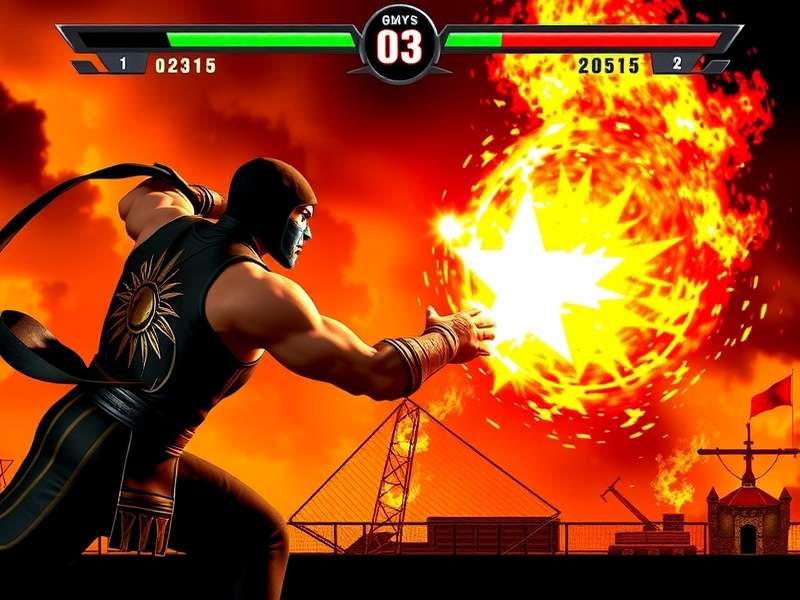
The mode served as the game's primary lore delivery system. As you explored six distinct realms (Earthrealm, Outworld, Netherrealm, etc.), you encountered nearly every character in the roster, engaging in side quests and learning their motivations leading up to the final battle. Completing it 100% unlocked crucial secrets, including the true ending and Blaze as a playable character.
Key Secrets & Unlockables in Konquest
- Character Unlocks: Meeting specific characters under certain conditions (e.g., defeating Scorpion without using blocks) unlocked them for the main roster.
- Artifact Collection: Hidden throughout the realms were 120 "Art of Armageddon" artifacts, which unlocked concept art, biographies, and developer interviews.
- Alternate Costumes: Finding certain key items granted alternate outfits for characters in the main game.
- The Dragon King: A secret boss encounter with Onaga, requiring specific triggers, rewarded players with his unique fighting style.
The Mega Roster: Tier List & Character Breakdown 👊
With 62 fighters, balance was a Herculean task. While the game tried to give everyone a chance, the community quickly identified clear standouts and low-tiers. Below is a community-voted tier list based on data aggregated from Indian and international tournament play (circa 2007-2010).
Why Ermac Topped the Charts
Ermac's telekinetic push/pull moves provided unparalleled stage control and combo potential. His Force Port allowed for instant repositioning, making him unpredictable. Combined with high-damage juggles, he became the tournament favorite, especially in the competitive scenes of Mumbai and Delhi where precision play was rewarded.
Scorpion
Style: Ninjutsu / Hapkido
Best Move: Spear & Teleport Punch
Role: All-rounder
Sub-Zero
Style: Shotokan / Judo
Best Move: Ice Clone & Slide
Role: Zoner/Defensive
Kitana
Style: Tae Kwon Do / Wing Chun
Best Move: Square Wave & Fan Lift
Role: Rushdown
Raiden
Style: Shorin-Ryu / Baguazhang
Best Move: Superman Fly & Lightning
Role: Power Attacker
Kreate a Fighter: Limitless Customization 🛠️
This feature was a game-changer. For the first time, players could build their own kombatant from the ground up, choosing from 12 fighting styles (each with a full move set), 6 weapon styles, and a deep visual customization suite. The community went wild, creating replicas of characters from other franchises (like Street Fighter or Dragon Ball Z) and original designs.
The system was surprisingly robust. You allocated points to attributes like Strength, Speed, and Health, creating specialized builds. A "tank" with high strength and health but slow speed played completely differently from a "glass cannon" speedster. This added a RPG-like meta-layer to versus play, especially when local friends would bring their custom fighters to battle.
Fatalities & Arenas: The Good, The Bad, The Brutal 💀
Armageddon controversially replaced individual, pre-animated fatalities with the Kreate a Fatality system. Players had a short time limit to input a sequence of directional moves and buttons, with each input performing a specific brutal action (decapitation, spine rip, explosion, etc.) on the defeated opponent. While the idea promoted creativity, many fans felt it lacked the cinematic flair and uniqueness of traditional fatalities.
Iconic Arenas & Stage Fatalities
The game featured some of the most memorable stages in the series, many with interactive elements or stage fatalities.
- The Pyramid of Argus: The final battle arena. Huge, majestic, with a stage fatality involving the collapsing center pillar.
- Kuatan Jungle: Dynamic stage with a moving background and a pit filled with giant insects for a stage fatality.
- Sky Temple: Set on floating ruins, players could knock opponents off into the endless sky.
- Living Forest (Remastered): The classic stage returned with enhanced graphics and more animated, grasping trees.
Motor Kombat: The Chaotic Party Game Within a Game 🏎️
An unexpected but beloved addition. Motor Kombat was a fully functional kart-racing game featuring MK characters in themed vehicles (Scorpion's Hellfire Speeder, Sub-Zero's Ice Sled). Tracks were based on MK locales like the Soulnado or the Wu Shi Academy. It included power-ups (fireball projectiles, speed boosts, land mines) and became a staple for local multiplayer sessions. Many Indian players recall spending as much time racing as they did fighting, especially during family gatherings where non-fighting game fans could join in the fun.
Legacy & Impact: Why Armageddon Still Matters Today 📈
Despite some criticisms (repetitive fatalities, some rushed character models), Armageddon's ambition secures its legacy. It was a love letter to long-time fans, a grand finale that celebrated the series' history. It pushed the PS2 and Xbox hardware to their limits and demonstrated Midway's willingness to experiment.
The game's influence is seen in later titles. The concept of a massive, all-encompassing roster was revisited in Mortal Kombat Trilogy ports and arguably inspired the "everyone is here" approach of games like Super Smash Bros. Ultimate. The Kreate a Fighter system, while never repeated in full, inspired the extensive customization options in the MK11 gear system.
For the Indian gaming community, it was a title that defined a generation. It was complex enough for hardcore players to dive into for years, yet packed with enough accessible content (like Motor Kombat) to entertain casual gamers. It remains a cult classic, frequently discussed in forums and retro gaming groups across Delhi, Bangalore, and Mumbai.
Share Your Experience
What are your memories of MK: Armageddon? Favorite character? Secret found?