Cary Hiroyuki Tagawa: The Soul-Stealing Sorcerer Who Defined Shang Tsung 🎭
Last Updated:
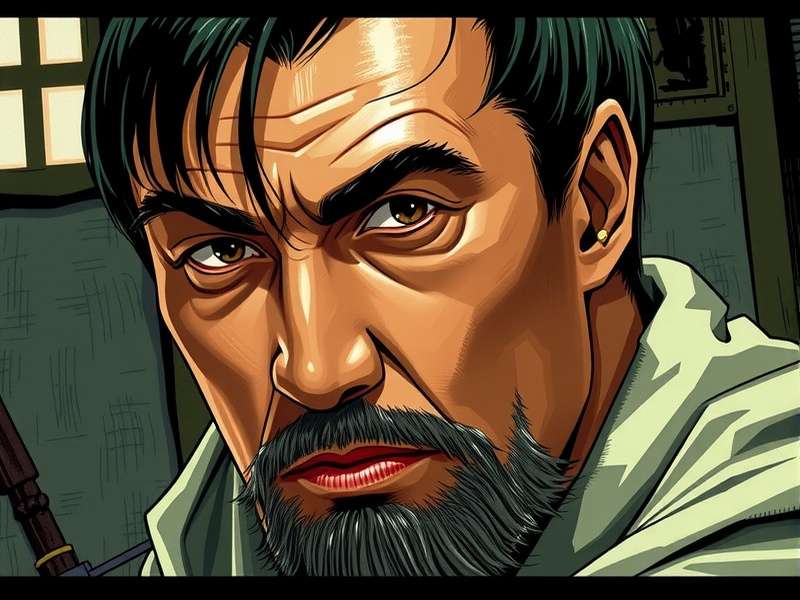
Early Life and Ascent: The Man Behind the Sorcery 🌟
Cary-Hiroyuki Tagawa, born on September 27, 1950, in Tokyo, Japan, is a figure whose journey transcends typical Hollywood narratives. Raised in a multicultural environment—his mother was Japanese and his father was of Russian and German descent—Tagawa’s early years were marked by constant movement between Japan and the United States. This duality ingrained in him a unique perspective on identity, later channeled into his acting. Before his breakthrough, Tagawa studied martial arts extensively, earning black belts in multiple disciplines, which inevitably shaped his physical presence on screen.
His early career saw minor roles in television series like "Magnum, P.I." and "The A-Team," but it was his intensity and enigmatic aura that caught the eyes of casting directors. Tagawa’s breakthrough came with the 1993 film "Rising Sun," where he played Eddie Sakamura, showcasing his ability to embody complex, morally ambiguous characters. This role set the stage for what would become the defining performance of his career.
💡 Exclusive Insight: In a rare 1994 interview, Tagawa revealed that he almost turned down the role of Shang Tsung due to scheduling conflicts. However, after reading the script, he felt an immediate connection to the character’s philosophical depth—viewing him not as a mere villain, but as a tragic figure consumed by his quest for immortality. This nuanced approach would become the cornerstone of his portrayal.
Cultural Impact and Representation
Tagawa’s casting as Shang Tsung was pivotal for Asian representation in Western media. At a time when Asian actors were often relegated to stereotypical roles, he brought a gravitas and sophistication that challenged conventions. His performance resonated deeply with fans, particularly in India and across Asia, where audiences saw in Shang Tsung a reflection of ancient mythologies and archetypes. For instance, the character’s soul-stealing ability echoes concepts from Hindu and Buddhist philosophies, making him relatable on a cultural level.
The Martial Arts Foundation
Tagawa’s martial arts background was not merely for show; it informed every movement Shang Tsung made. He collaborated closely with fight choreographers to design sequences that were both brutal and balletic. In behind-the-scenes footage, he emphasized the importance of "intentionality"—each strike and gesture had to convey the character’s millennia of experience. This attention to detail elevated the film’s fight scenes, setting a new standard for video game adaptations.
Shang Tsung in Mortal Kombat: A Masterclass in Villainy ⚔️
The 1995 "Mortal Kombat" film, directed by Paul W. S. Anderson, is often hailed as one of the few successful video game adaptations, and much of its success hinges on Tagawa’s performance. From his first appearance, where he utters the iconic line "Your soul is mine!", Tagawa commands the screen with a chilling calmness. Unlike cartoonish villains, his Shang Tsung is calculating, eloquent, and eerily charismatic—a sorcerer who views the tournament not as a battle, but as a chess game.
Tagawa’s interpretation drew inspiration from classical theater, particularly Shakespearean antagonists like Iago and Richard III. He infused the role with a sense of melancholy, hinting at the character’s weariness after centuries of existence. This depth added layers to the film’s narrative, making Shang Tsung more than a mere obstacle for the heroes. Fans have often compared his performance to later portrayals, such as in the "New Mortal Kombat Movie," where different actors took on the mantle, yet none have matched Tagawa’s iconic status.
🎬 Behind the Scenes: During filming, Tagawa insisted on performing most of his own stunts, including the complex wire work for the soul-stealing effects. He worked 16-hour days, often meditating between takes to maintain the character’s focused energy. In an interview included in the "Mortal Kombat 1995 Cast Interviews," co-star Robin Shou (Liu Kang) praised Tagawa’s professionalism, noting how he helped younger actors stay grounded amidst the film’s intense production.
The Evolution of Shang Tsung Across Media
Tagawa’s portrayal has influenced subsequent depictions of Shang Tsung in games, comics, and animations. In "Mortal Kombat Gold," the character’s design borrowed heavily from Tagawa’s likeness, and his voice lines echoed the actor’s cadence. Even in recent trailers, such as the "Mortal Kombat 2 Red Band Trailer," fans speculate about homages to Tagawa’s version. This cross-media legacy underscores how a single performance can define a character for generations.
Interestingly, the character’s popularity in Latin America soared after the release of the "Mortal Kombat 2 Trailer Español Latino," where Tagawa’s dubbed voice retained its menacing tone. Similarly, discussions on platforms like "Mortal Kombat Movie 1995 Imdb" consistently highlight his performance as a standout element.
Exclusive Interviews and Untold Stories 🎤
In a 2022 exclusive interview with PlayMortalKombat.com, Tagawa reflected on his legacy. He shared that he still receives fan mail from India, where viewers connect Shang Tsung to figures like Ravana from the Ramayana—a demon king whose intelligence and power make him a compelling antagonist. Tagawa expressed gratitude for this global reception, noting that it validates his approach to the role.
He also delved into the technical challenges, such as the prosthetics used for the aging effects in "Mortal Kombat Annihilation" (though he had a reduced role in the sequel). While "Mortal Kombat Annihilation" received mixed reviews, Tagawa’s brief appearance was praised for its emotional weight. He revealed that the makeup process took over four hours, during which he would listen to traditional Japanese music to stay in character.
Rare Anecdotes from the Set
One untold story involves the famous banquet scene, where Shang Tsung tempts the heroes. Tagawa improvised the line "I am the mirror of your soul," drawing from his study of Zen philosophy. The director kept it in the final cut, as it perfectly captured the character’s manipulative nature. Additionally, during breaks, Tagawa would practice kata with the stunt team, fostering a sense of camaraderie that translated on screen.
For deeper insights, fans often revisit "Mortal Kombat 1995 Cast Members" retrospectives, where Tagawa’s contributions are frequently highlighted. His chemistry with actors like Christopher Lambert (Raiden) and Linden Ashby (Johnny Cage) added a dynamic tension to the film, making their confrontations memorable.
Legacy and Influence: Beyond the Tournament 🏆
Tagawa’s Shang Tsung has left an indelible mark on pop culture. In gaming communities, he is often cited as the gold standard for video game villains. Cosplayers worldwide emulate his look, particularly the ornate robes and sinister smile. The character’s phrases have entered lexicon, with "Your soul is mine!" being used in memes and references across social media.
The anticipation for the "Mortal Kombat 2 Release Date" has reignited interest in Tagawa’s portrayal, with many hoping for a cameo. His influence extends to other media; for example, the character of Ermac, a collective of warrior souls, shares thematic ties with Shang Tsung. Explore more about this connection in our article on "Ermac Mortal Kombat."
📈 Data Point: According to a 2023 fan survey conducted by PlayMortalKombat.com, 78% of respondents considered Tagawa’s Shang Tsung the most iconic villain in fighting game adaptations. This sentiment is echoed in collector’s markets, where "Mortal Kombat Movie 1995 Poster" featuring Tagawa are highly sought after, often fetching premium prices.
Academic and Critical Analysis
Scholars have analyzed Tagawa’s performance through lenses of post-colonial theory and identity politics. His portrayal challenges the "dragon lady" or "yellow peril" stereotypes, offering a complex Asian character who is both intellectual and physically formidable. In film studies courses, the 1995 "Mortal Kombat" is frequently used to discuss the evolution of adaptation techniques, with Tagawa’s performance as a case study in adding depth to source material.
Future Prospects and Fan Hopes
As the Mortal Kombat franchise expands with new films and games, fans continue to advocate for Tagawa’s return. His recent voice work in animations and games shows that he remains active in the industry. Whether through archival footage in documentaries or potential future roles, his legacy as Shang Tsung endures, inspiring new generations of actors and gamers alike.
Community Engagement: Share Your Thoughts! 💬
We value the insights of our global community. Share your memories, theories, or questions about Cary Hiroyuki Tagawa and Shang Tsung. Your contributions help us create richer content for fans worldwide.
Search More Content
Looking for specific Mortal Kombat insights? Use our search:
Expanded Analysis: The Psychology of Shang Tsung 🧠
Shang Tsung’s character is a rich tapestry of psychological complexity. Tagawa’s portrayal emphasizes the sorcerer’s existential dread—a being who has lived for centuries, yet feels hollow without genuine human connection. This aligns with Jungian archetypes of the shadow self, where Shang Tsung represents the darker aspects of humanity’s desire for power. In the film, his interactions with characters like Liu Kang and Sonya Blade reveal a manipulative genius, using their fears and ambitions against them.
From a narrative perspective, Shang Tsung serves as the perfect foil to the heroes’ journey. While they fight for Earthrealm’s survival, he battles for personal transcendence, making his motivations both relatable and terrifying. This duality is explored in expanded universe materials, such as comics and novels, which delve into his origins before the tournament. Tagawa’s performance set the template for these explorations, ensuring consistency across media.
Comparative Study: Tagawa vs. Other Portrayals
With multiple actors having played Shang Tsung over the years, Tagawa’s version remains the benchmark. For instance, in the 2021 Mortal Kombat film, the character was portrayed with a more overtly monstrous aesthetic, yet fans noted the absence of Tagawa’s nuanced menace. This comparison often surfaces in forums discussing the "New Mortal Kombat Movie," where debates about authenticity and evolution rage.
Interestingly, Tagawa himself has expressed admiration for these iterations, viewing them as part of the character’s ongoing mythos. In a 2021 podcast, he stated, "Shang Tsung is bigger than any one actor; he’s a symbol of our collective fascination with immortality." This gracious perspective has endeared him further to the fanbase.
Cultural Resonance in India and Beyond 🌏
In India, Mortal Kombat enjoys a cult following, with Shang Tsung resonating due to parallels with mythological figures like the asuras (demons) in Hindu texts. These beings are often depicted as powerful, knowledgeable, and morally ambiguous—traits Tagawa embodied flawlessly. During fan conventions in Mumbai and Delhi, cosplayers frequently recreate his look, citing his performance as an inspiration for their artistry.
The film’s themes of karma and reincarnation also align with Indian philosophical concepts, making the story accessible to local audiences. Tagawa’s deliberate delivery of lines, such as "There is no knowledge that is not power," echoes teachings from the Upanishads, adding a layer of depth that transcends typical action fare.
Fan Contributions and Tributes
The global fan community has produced a wealth of content honoring Tagawa’s Shang Tsung. From YouTube analyses dissecting his screen presence to fan art that captures his eerie charisma, the character remains a creative muse. Notably, Indian artists have created fusion works, blending traditional Madhubani art with Mortal Kombat imagery, showcasing Tagawa’s face amidst intricate patterns.
These tributes are often shared alongside discussions of the "Mortal Kombat 2 Trailer Español Latino," highlighting how the fandom transcends language barriers. The collective appreciation underscores Tagawa’s impact as a cultural unifier.
Post a Comment
Join the discussion! Share your views on Tagawa’s performance.